About High Alumina Sillimanite Refractory Products
FLONITE-70 High Alumina Sillimanite Refractory
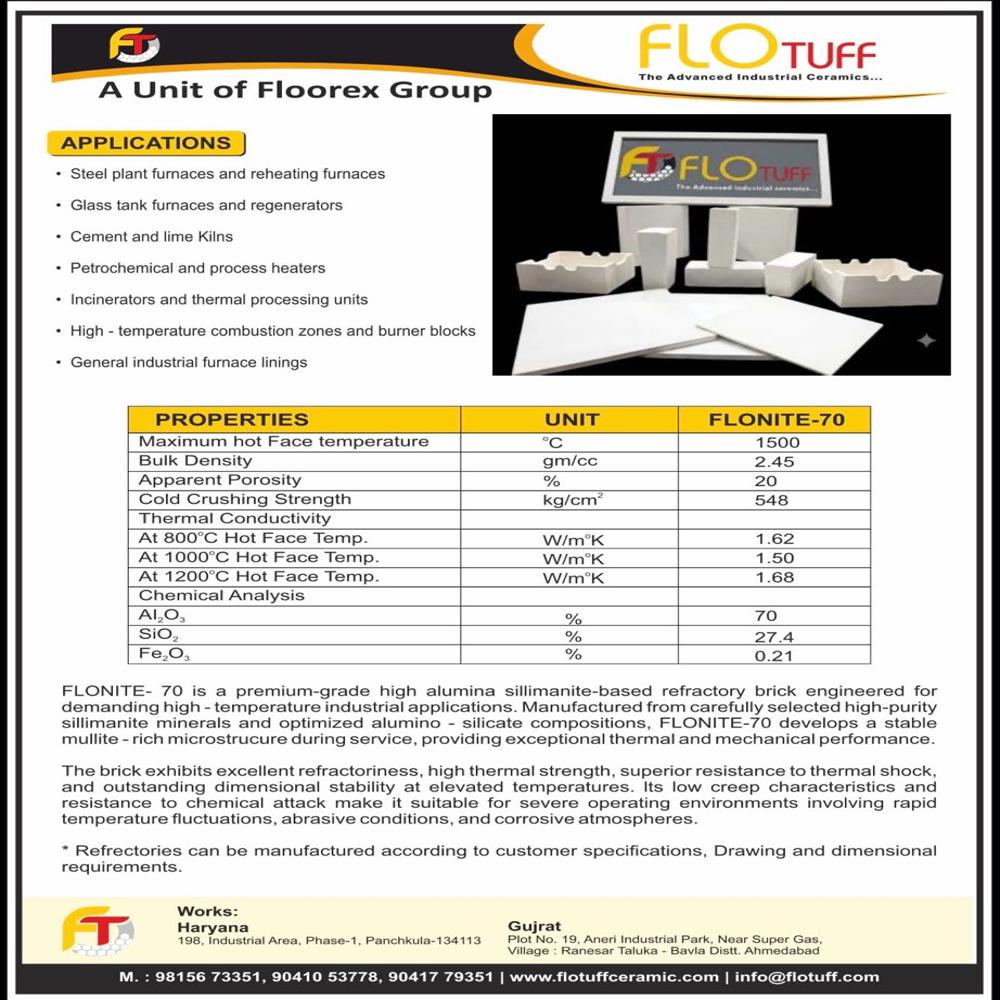
FLONITE-70 is a premium-grade high alumina sillimanite-based refractory engineered for demanding high-temperature industrial applications up to 1500 degrees Celsius. Manufactured from carefully selected high-purity sillimanite minerals and optimized alumino-silicate compositions, FLONITE-70 develops a stable mullite-rich microstructure during service, providing exceptional thermal and mechanical performance.
The brick exhibits excellent refractoriness, high hot strength, superior resistance to thermal shock, and outstanding dimensional stability at elevated temperatures. Its low creep characteristics and resistance to chemical attack make it suitable for severe operating environments involving rapid temperature fluctuations, abrasive conditions, and corrosive atmospheres.
FLONITE-70 offers reliable performance in furnaces, kilns, reheating units, glass melting equipment, steel processing installations, and other thermal processing systems where long service life and operational stability are critical. The combination of high alumina content and sillimanite-derived mullite formation ensures enhanced resistance to spalling, slag attack, and flame impingement, resulting in reduced maintenance requirements and improved furnace efficiency.
Key Features
- High alumina, mullite-forming sillimanite composition
- Excellent thermal shock and spalling resistance
- High mechanical strength at elevated temperatures
- Superior volume stability and low creep
- Good resistance to slag, alkalis, and chemical attack
- Reliable performance under severe thermal cycling conditions
- Extended service life in high-temperature applications
Typical Applications
- Steel plant furnaces and reheating furnaces
- Glass tank furnaces and regenerators
- Cement and lime kilns
- Petrochemical and process heaters
- Incinerators and thermal processing units
- High-temperature combustion zones and burner blocks
- General industrial furnace linings
Exceptional Thermal Shock ResistanceThese high alumina sillimanite refractory products can withstand rapid temperature changes, performing reliably for over 25 cycles at 1100C. This resilience is crucial for kilns and furnaces where temperature fluctuations are routine, helping to prevent cracking and premature failure.
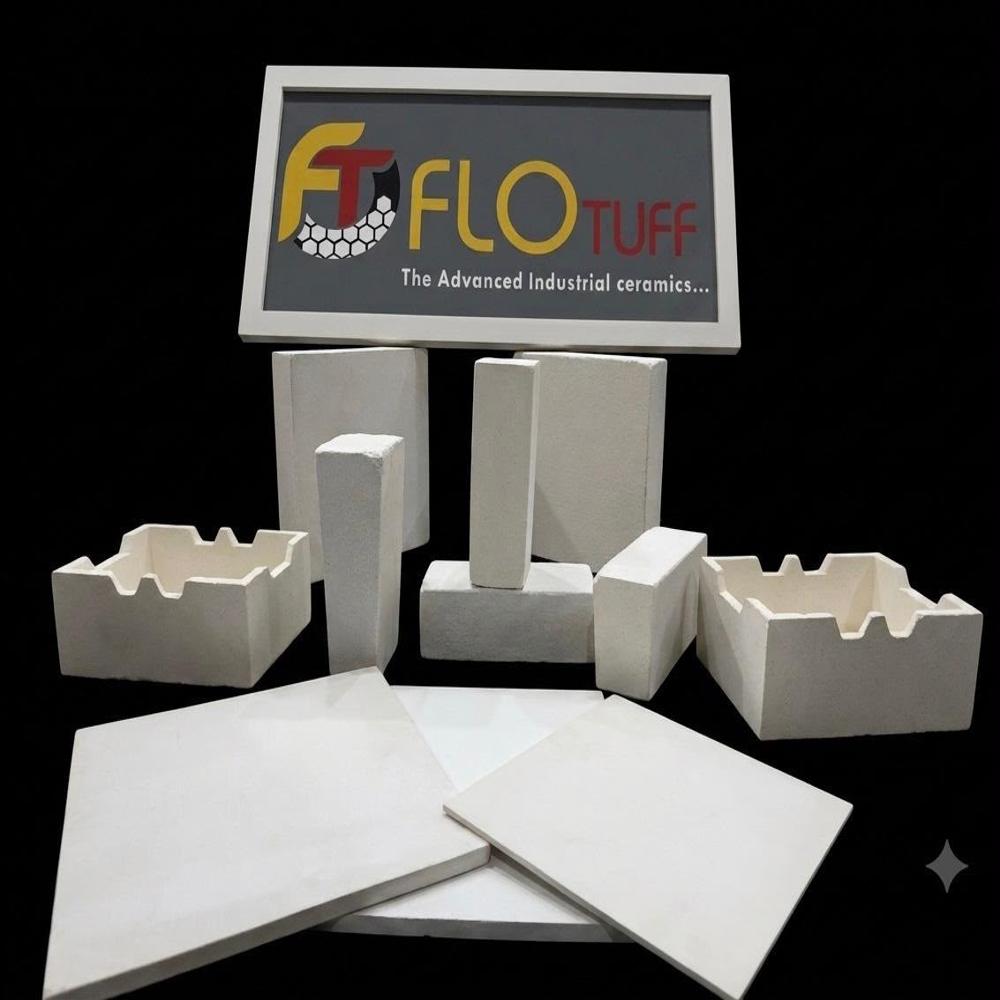
Precise Shapes and CustomizationAvailable in standard rectangular and square shapes as well as custom forms, our refractory products meet a wide variety of design and installation requirements. Each product is manufactured to a dimensional accuracy of 1 mm, ensuring a proper fit for any application.
Advanced Ceramic TechnologyUtilizing high temperature fired ceramic methods, these refractories achieve smooth finishes and robust mechanical strength. Their bulk density and porosity are precisely controlled for optimal insulation, supporting energy efficiency and long-term operation in high-temperature environments.
FAQ's of High Alumina Sillimanite Refractory Products:
Q: How do high alumina sillimanite refractory products withstand extreme temperatures?
A: With alumina content above 60% and sillimanite content above 40%, these products exhibit outstanding heat resistance and a maximum service temperature of 1700C, making them ideal for demanding thermal applications.
Q: What are the typical applications for these refractory bricks and shapes?
A: They are primarily used in high-temperature industries such as kilns, furnaces, and glass tanks due to their excellent thermal insulation and durability against heat and mechanical stress.
Q: When should I choose custom refractory shapes over standard options?
A: Custom shapes are recommended when the installation requires specific dimensions or geometry not covered by standard rectangular or square bricks. This ensures an optimal fit and performance within unique equipment or lining configurations.
Q: Where can these refractory products be installed?
A: These products can be installed in any industrial equipment exposed to high heat, such as in the linings of rotary kilns, furnaces, incinerators, and glass manufacturing tanks.
Q: What process is used in manufacturing these refractories?
A: High temperature fired ceramic technology is employed, ensuring consistent strength, surface finish, and thermal properties tailored to withstand severe operational conditions.
Q: How does their thermal shock resistance benefit industrial operations?
A: Their ability to survive more than 25 thermal cycles at 1100C helps minimize cracking and downtime, leading to reduced maintenance and longer operational life in facilities with frequent temperature changes.










 Send Inquiry

 Send Inquiry
